
 Doug Hutchinson
Want to Retire Early? 7 Financial Strategies to Consider
Dreaming of retiring before 65? Avoid costly mistakes. Early retirement strategies include maximizing your 401(k), starting an HSA and the IRS Rule...

Successful early retirement requires a financial plan that can withstand 30–40 years. Unfortunately, many early retirees overlook landmines that can drain their wealth prematurely.
In our previous article, Seven Savings Strategies for Early Retirement, we shared proven ways to build wealth and retire early. In this article, we’ll answer another important question: Are you financially prepared for early retirement?
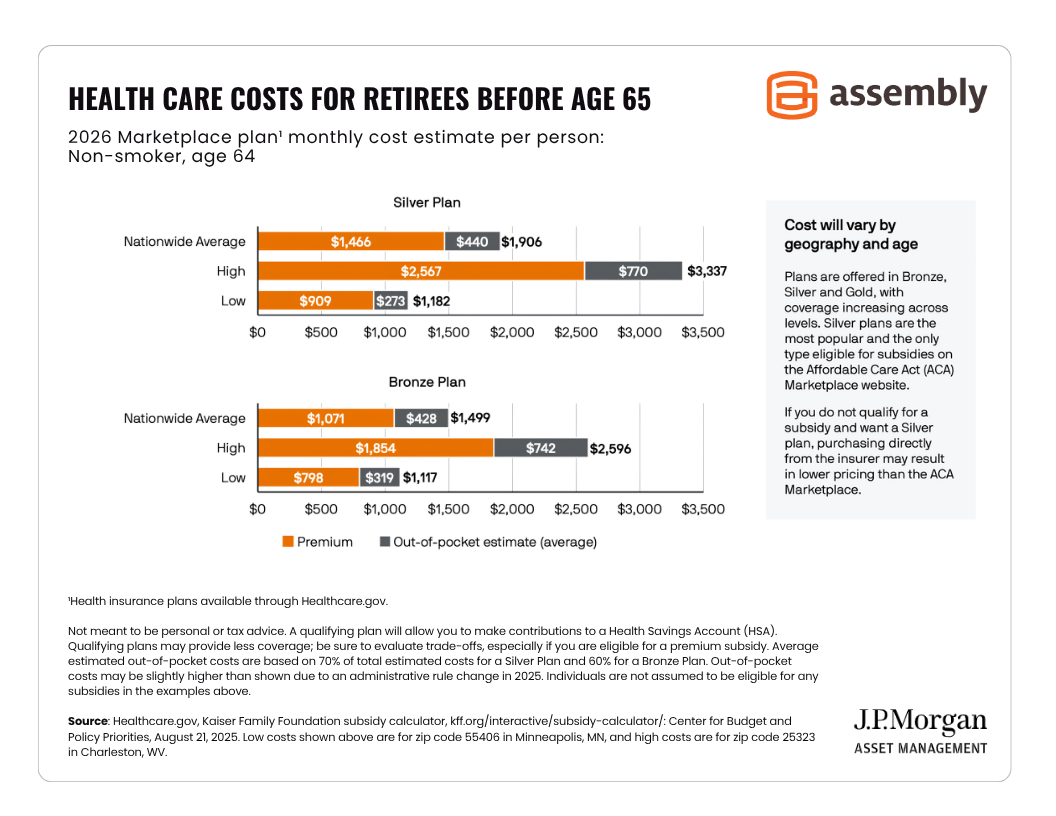
Healthcare is one of the biggest challenges for early retirees. Medicare doesn’t kick in until you turn 65, so people who retire early face a gap of 10, 15, or even 20 years without employer-subsidized health insurance.
Medical emergencies can wipe out a lifetime of savings very quickly. More than half a million Americans who file for bankruptcy each year cite medical bills as the primary cause.
To avoid paying a significant chunk of your savings to a health care provider, it’s a good idea to have some form of insurance. This could be:
Click to view a larger image
SOURCE: J.P. Morgan Guide to Retirement 2026
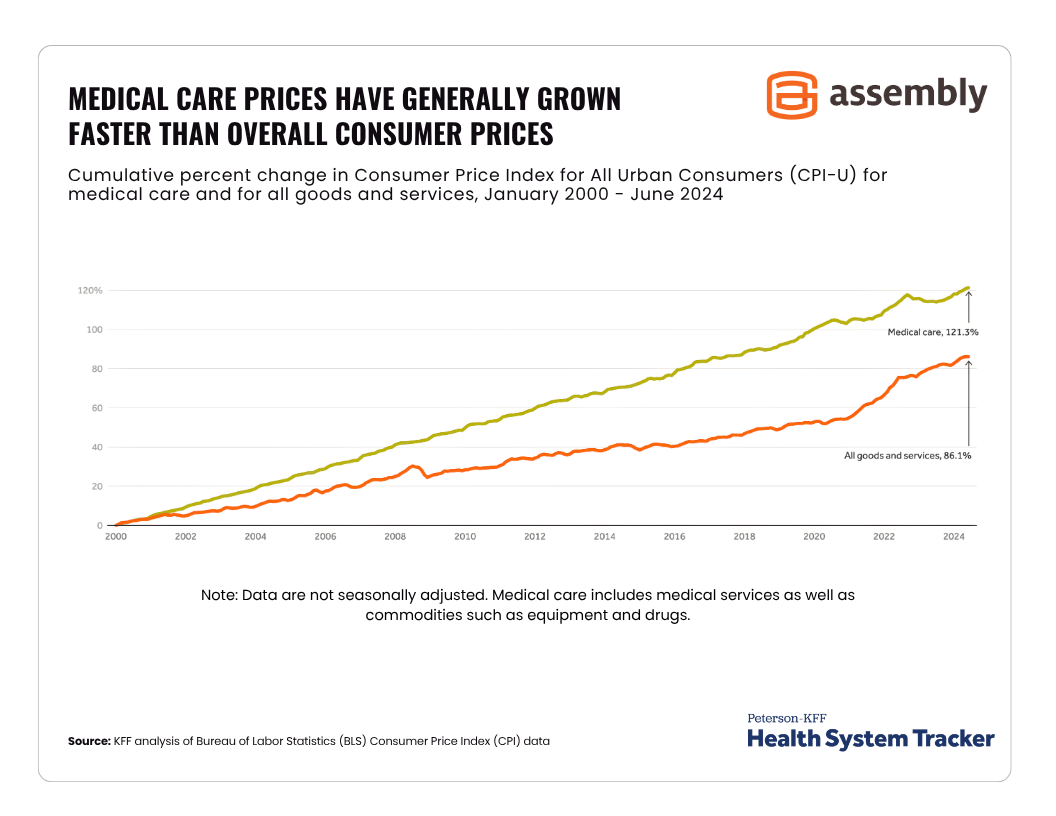
If you choose to stay in the U.S., be sure to budget for premiums, deductibles and annual price increases. Since 2000, the cost for medical care, including insurance, medication and services from providers, has increased by more than 121%. This increase is 35% higher than the increase in cost for other consumer goods and services.
Click to view a larger image
SOURCE: Peterson KFF
A financial advisor can help you create a financial plan that can cover the costs of routine and emergency health care.
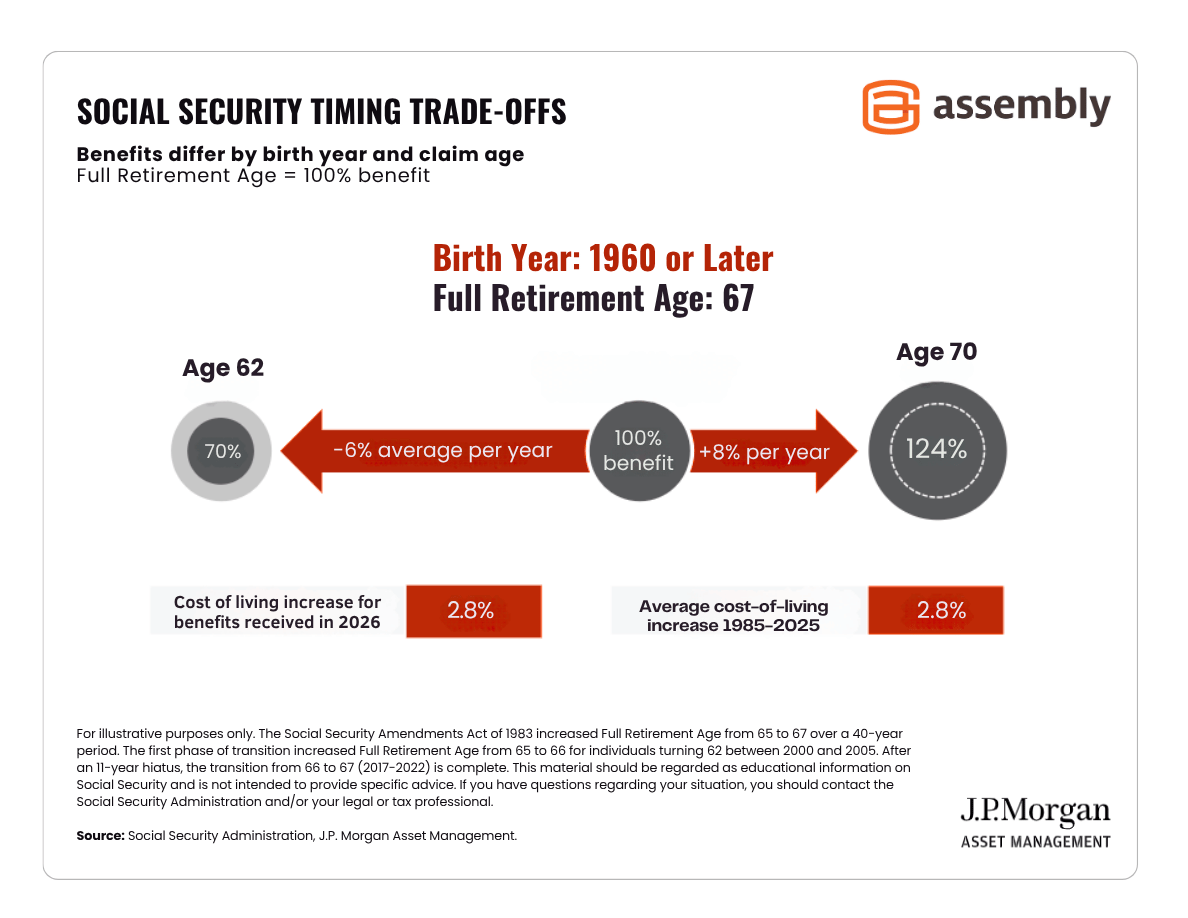
You can start collecting Social Security at age 62, but if you file for Social Security benefits before age 67, this is considered “early retirement,” and your monthly payment will be up to 30% less.
Click to view a larger image
SOURCE: J.P. Morgan Guide to Retirement 2026
As the chart above shows, the benefit reduction depends on when you file (age 62 vs age 66). Two important things to note:
A financial advisor can help you chart out when to claim Social Security. They can help you factor in other income sources, retirement goals and any legacy wishes.
For more on this topic, read our deep dive about When to Take Social Security. The article also covers the Social Security breakeven age: the age where the value of waiting to start Social Security surpasses the value of collecting benefits early.
Life can throw expensive surprises your way. Vehicles break down, pipes burst and natural disasters can make your home uninhabitable. Insurance can cover some of these expenses, but you may need to pay up front and wait for reimbursement.
Economic downturns are also a major concern. If the market drops, the last thing you want to do is sell your investments at a loss. To avoid dollar cost ravaging your portfolio, it’s a good idea to have 1–2 years’ worth of living expenses in a money market account, CDs or other liquid assets.
It can be tempting to use retirement accounts as a quick source of cash, but taking money out of 401(k) plans or traditional IRAs before you turn age 59½ can be costly. The IRS levies a 10% penalty for early withdrawals from 401(k) and IRA accounts unless the money is needed for a qualified expense. This 10% penalty is in addition to federal (and possibly state) income tax.
NOTE: If you plan to work until at least age 55, you can take advantage of the IRS Rule of 55.
What about withdrawals from a Roth IRA? You can withdraw contributions penalty-free, but doing so reduces the amount of money available to grow tax-free.
Let’s say you contributed $48,000 to your Roth over 20 years and invested in an S&P index fund. The account is now worth $122,000 thanks to stock market growth and the power of compound interest.
* The S&P’s average, annualized return has been 9% over the past 30 years (6.3% when adjusted for inflation). Past performance does not guarantee future results.
Retiring early is about more than reaching a savings goal. It's about making sure your finances can support decades of living without a paycheck.
Before making your official exit from the workforce, take these final precautions:
Adjusting your budget before you retire is much easier than discovering your plan is inadequate after you've already left your job. Also, knowing you have a feasible financial plan will help you feel more confident and able to enjoy your early retirement.
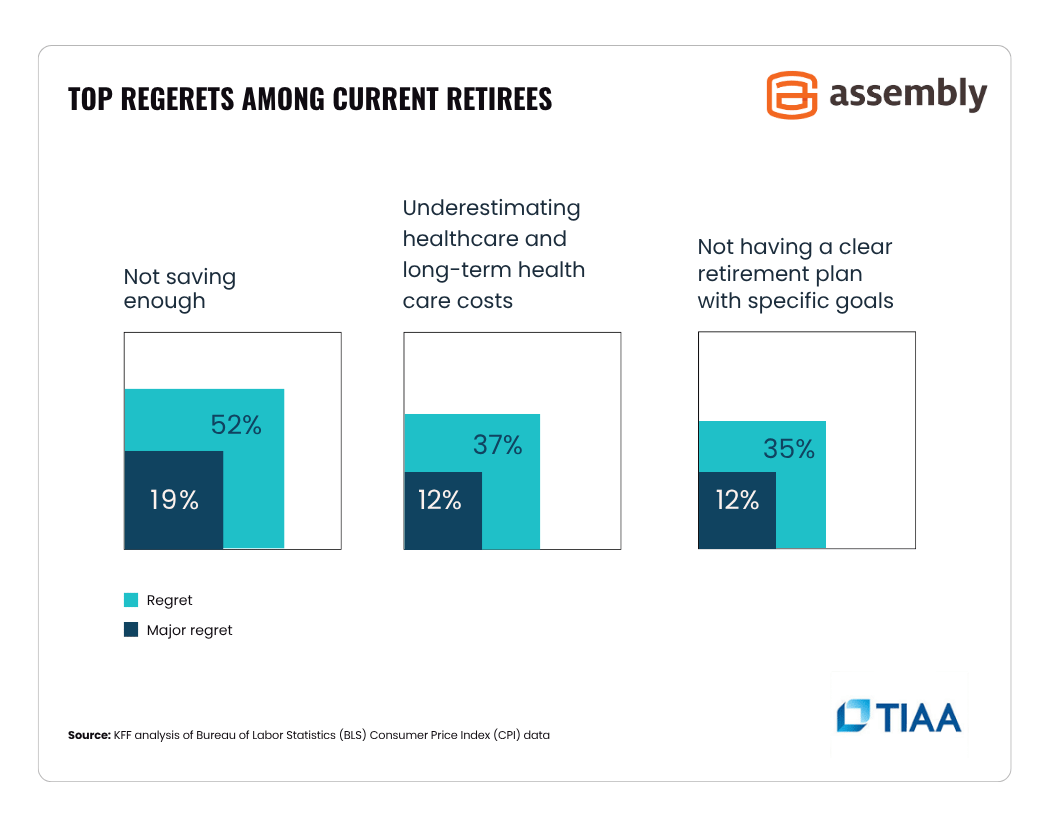
Early retirement is an exciting goal, but it requires careful planning. Underestimating your insurance needs or withdrawing from the wrong account at the wrong time can cost you thousands of dollars.
Click to view a larger image
SOURCE: TIAA Institute
Don't leave your future to chance. Consult a financial advisor who can help you optimize your investments, review your plan and make sure you are truly ready to take the leap. They can also help you account for inflation and what steps you should take (or not take) during a major market downturn.
According to the TIAA Institute, 1 in 4 Americans who work with a financial professional report nearly double the confidence in retirement planning compared to those who did not work with an advisor.
Our friendly and experienced wealth managers will help you build a personalized strategy. Contact us online or give us a call at (415) 541-7774.

Disclaimer:
Assembly Wealth (“Assembly”) is an SEC registered investment adviser; however, this does not imply any level of skill or training and no inference of such should be made. The opinions expressed herein are as of the date of publication and are provided for informational purposes only. Content will not be updated after publication and should not be considered current after the publication date. We provide historical content for transparency purposes only. All opinions are subject to change without notice and due to changes in the market or economic conditions may not necessarily come to pass. Mention of a security should not be considered a recommendation or solicitation to purchase or sell the security, and any securities mentioned may be held by Assembly for client portfolios.
This material has been prepared for informational purposes only, and is not intended to provide, and should not be relied on for, tax, legal or accounting advice. You should consult your own tax, legal and accounting advisors before engaging in any transaction.
The S&P 500 Index is an unmanaged index generally considered representative of the U.S. large-cap equity market. Investors cannot invest directly in an index. Index performance does not reflect the deduction of fees, expenses, or taxes.
The charts and examples presented are hypothetical and provided solely for illustrative purposes. They are based on assumptions regarding contribution amounts, rates of return, investment time horizons, and other factors that may not reflect actual market conditions or an investor's experience. Actual results will vary and may be materially higher or lower than those illustrated. These examples are not guarantees or predictions of future investment performance or results. The illustrations do not reflect the deduction of investment advisory fees, transaction costs, taxes, inflation, or other factors that may reduce investment returns. Past performance is not indicative of future results.
Information presented represents an opinion as of the date published and should not be considered an investment recommendation. Assembly does not become a fiduciary to any listener, reader or other person or entity by the person’s use of or access to the material. The reader assumes the responsibility of evaluating the merits and risks associated with the use of any information or other content and for any decisions based on such content.
Dreaming of retiring before 65? Avoid costly mistakes. Early retirement strategies include maximizing your 401(k), starting an HSA and the IRS Rule...
Is it ever a good idea to use money from your 401k to pay off debt? Learn about 401k loan rules and the consequences of withdrawing money early.

Can you have an IRA and a 401k? Is it a good idea to consolidate retirement accounts? Yes and yes! Learn more.